Dr. Sameer Desai

Ganglion cyst treatment

Ganglion specialist in pune

A Small Lump Could Be a Ganglion Cyst: Causes, Symptoms, and Treatment Options

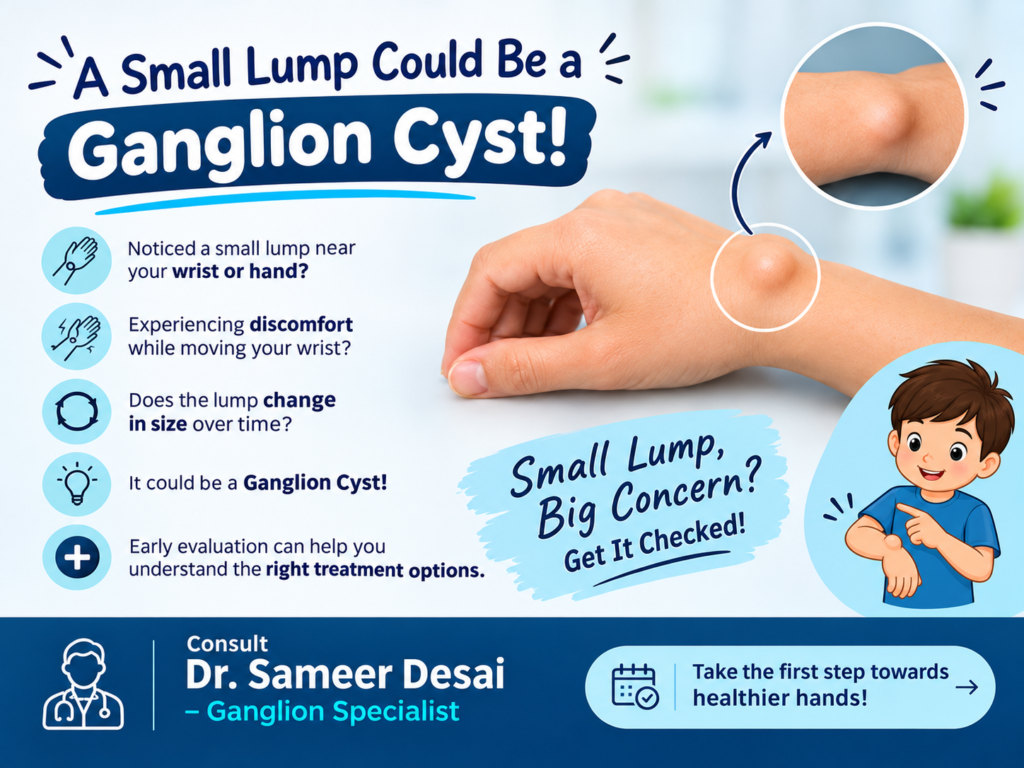
Have you recently noticed a small lump on your wrist or hand? Perhaps it appeared suddenly, or you have noticed that it becomes more prominent after certain activities. While discovering an unfamiliar lump can be worrying, not every swelling is a sign of a serious medical condition. One possible explanation is a ganglion cyst, a common, non-cancerous, fluid-filled lump that usually develops near a joint or tendon. Ganglion cysts can affect people of different ages, including children and adults. Some remain small and painless, while others may cause discomfort, restrict movement, or interfere with everyday activities. Understanding what causes these lumps, how to recognise them, and when to seek medical advice can help you make informed decisions about your hand and wrist health. What Is a Ganglion Cyst? A ganglion cyst is a fluid-filled swelling that develops near a joint or tendon sheath. It contains a thick, jelly-like fluid similar to the lubricating fluid found inside joints. These cysts most commonly appear on the back of the wrist, although they may also develop on the palm side of the wrist, near the fingers, or around other joints. Unlike cancerous growths, ganglion cysts are benign. Many do not require treatment and may disappear naturally over time. However, their appearance and size can vary. Some are barely noticeable, while others grow large enough to become uncomfortable or affect hand movement. According to the American Academy of Orthopaedic Surgeons, ganglion cysts are among the most common lumps affecting the hand and wrist. What Causes a Ganglion Cyst? The exact cause of ganglion cyst formation is not fully understood. A ganglion cyst develops when fluid collects within a sac connected to a joint or tendon sheath. Several factors may be associated with its development. 1. Repetitive wrist movements Activities involving repeated wrist movement or pressure may contribute to symptoms or make an existing cyst more noticeable. 2. Joint or tendon irritation Changes or irritation around joint tissues may be associated with the formation of these fluid-filled swellings. 3. Previous joint injuries Some ganglion cysts may develop following an injury, although many appear without any identifiable injury. 4. Changes in joint tissues Wear and tear or arthritic changes in certain finger joints can sometimes be associated with specific types of ganglion cysts. Importantly, a ganglion cyst may develop even in someone who has never experienced a wrist injury or joint problem. Common Signs and Symptoms of a Ganglion Cyst Not every ganglion cyst causes pain. In fact, many people first notice a lump while washing their hands, wearing a watch, or performing daily activities. Some common symptoms include: A visible lump: A rounded swelling near the wrist, hand, or finger joint. Changes in size: The lump may become larger or smaller over time. Wrist discomfort: Pain or aching may occur during certain movements. Limited movement: Larger or uncomfortable cysts may make some activities difficult. Tingling or numbness: Occasionally, a cyst may press against a nearby nerve and cause altered sensation. A ganglion cyst can also remain completely painless. If the lump becomes painful, grows noticeably, or begins affecting hand function, an orthopaedic evaluation is advisable. Can Children Develop Ganglion Cysts? Yes. Although ganglion cysts are commonly discussed in adults, they can also develop in children and teenagers. Parents may notice a small swelling on their child’s wrist while helping them dress, during playtime, or after sports activities. In many cases, childhood ganglion cysts are painless and do not interfere with normal hand function. Some may disappear naturally without medical intervention. Therefore, surgery is not automatically necessary simply because a child has a ganglion cyst. However, parents should seek medical advice when the swelling becomes painful, increases in size, affects wrist movement, or causes unusual sensations. An orthopaedic specialist can examine the lump and determine whether observation, further investigation, or treatment is appropriate. How Is a Ganglion Cyst Diagnosed? Diagnosis usually begins with a physical examination and a discussion of the patient’s symptoms. The doctor may ask when the lump first appeared, whether its size has changed, and whether it causes pain during movement. During the examination, the doctor assesses the lump’s location, consistency, tenderness, and relationship to nearby joints. In some cases, additional investigations may be recommended. Ultrasound: Helps determine whether the lump is fluid-filled or solid. MRI scan: May be useful when a cyst is hidden beneath the skin, the diagnosis is uncertain, or nearby structures need further assessment. X-ray: Does not directly show a ganglion cyst but may help identify associated bone or joint conditions. Not every patient requires imaging. Many ganglion cysts can be recognised through clinical examination alone. Does Every Ganglion Cyst Need Treatment? No. Treatment depends on the cyst’s size, location, symptoms, and effect on daily activities. 1. Observation and monitoring For a small, painless ganglion cyst, the doctor may recommend monitoring it rather than treating it immediately. Some cysts shrink or disappear naturally over time. Regular observation can help identify changes that require further assessment. 2. Activity modification and wrist support If certain movements cause discomfort, temporarily modifying those activities may help. A wrist brace or splint may sometimes be recommended to reduce strain and relieve symptoms. However, prolonged immobilisation should be avoided unless specifically advised by a healthcare professional. 3. Aspiration Aspiration involves removing fluid from the cyst using a needle. It may be considered for selected symptomatic cysts, particularly those located on the back of the wrist. However, the cyst may return because its connection to the joint or tendon sheath remains. Aspiration is not suitable for every cyst, especially when important nerves or blood vessels are nearby. 4. Surgical removal Surgery may be considered when a ganglion cyst causes persistent pain, affects movement, or continues to interfere with normal activities despite conservative treatment. During surgery, the cyst and its connecting stalk are removed. Although surgery can provide symptom relief, there is still a possibility that the cyst may return. The decision to operate should be based on an individual assessment rather than the appearance of

A Small Lump Could Be a Ganglion Cyst: Causes, Symptoms, and Treatment Options Read More »

India’s Best Pediatric orthopedic surgeon in Pune

India’s Best Pediatric Orthopedic Surgeon

Trust is important when it comes to your child\’s bone and joint health. One of the top pediatric orthopedic surgeons in India, Dr. Sameer Desai provides specialist treatment for a variety of childhood bone, joint, and muscle disorders. His kind, knowledgeable approach to pediatric orthopedic care promotes children\’s pain-free, active, and healthy lifestyles. The problems that Dr. Sameer Desai specializes in and the newest therapies he offers to cure them are listed below. 1. Kids\’ Bone Health Proper bone development is crucial in childhood, as it sets the foundation for a child’s future mobility. Dr. Sameer Desai provides expert diagnosis and treatment for any bone-related issues, ensuring proper growth and strength. His approach to treating bone conditions takes into account the age, growth stage, and overall health of the child to ensure the best possible outcomes. 2. Kids\’ Fractures Children are often active and prone to injuries, including fractures. Dr. Desai offers comprehensive fracture care, from simple breaks to more complex fractures. He uses advanced techniques to ensure bones heal correctly, minimizing the risk of long-term complications. His goal is to help children recover quickly so they can return to their active lifestyles. 3. Kids\’ Deformities Limb deformities can significantly affect a child\’s mobility and self-esteem. Dr. Sameer Desai specializes in diagnosing and treating various congenital and acquired deformities, such as limb-length discrepancies or rotational deformities. Through non-surgical methods, such as braces, or surgical corrections, Dr. Desai ensures children lead an active life without the limitations caused by deformities. 4. Bone Infections Bone infections (osteomyelitis) can be serious, leading to chronic issues if not treated promptly. Dr. Desai has vast experience in managing bone infections in children, using a combination of antibiotics, surgery, and follow-up care to ensure the infection is eradicated and the bone is allowed to heal properly. 5. Knee Deformity Conditions like knock knees or bow legs affect children’s knees, potentially causing discomfort and long-term mobility issues. Dr. Desai is an expert in diagnosing and treating knee deformities. He uses advanced techniques like guided growth and other non-invasive treatments to realign the knee, allowing the child to develop a normal walking pattern and avoid future complications. 6. Foot Deformity Foot deformities like clubfoot, flat feet, or other congenital abnormalities are common among children. Dr. Desai utilizes the Ponseti method for treating clubfoot, along with other corrective measures for different foot deformities. His treatment options are designed to restore function, improve appearance, and ensure that children are able to walk comfortably. 7. Flat Feet Flat feet, a common condition in children, can cause discomfort and difficulty walking. In many cases, it can lead to other orthopedic issues. Dr. Desai provides effective treatment, including customized orthotics and exercises, to help children with flat feet walk without pain or discomfort. 8. Clubfoot Clubfoot is a congenital condition where a child\’s foot is twisted. Dr. Sameer Desai expertly treats it using the Ponseti method, which involves gentle manipulation and casting. In severe cases, surgery may be needed to correct the deformity, ensuring a functional, pain-free foot for your child. 9. Intoe Gait Intoe gait is a condition where a child walks with their feet pointing inward. It can cause discomfort and lead to further orthopedic problems if left untreated. Dr. Sameer Desai specializes in diagnosing and treating intoe gait through various therapies, braces, and surgical interventions if necessary. His treatments help children walk more naturally, improving posture and mobility. 10. Cerebral Palsy Cerebral palsy (CP) can cause developmental delays and difficulty with movement. Dr. Desai takes a multidisciplinary approach to treating children with cerebral palsy, offering physiotherapy, occupational therapy, and surgical interventions when necessary to improve mobility, muscle control, and overall quality of life. His treatments aim to maximize a child’s independence and comfort. 11. Walking Difficulty Walking difficulty in children can arise from various conditions, such as muscle weakness, neurological issues, or bone deformities. Dr. Desai carefully assesses the root cause of walking difficulties and provides targeted treatments, such as physical therapy, bracing, and surgery, to help children regain mobility and independence. 12. Knock Knees Knock knees (genu valgum) is a condition where a child’s knees bend inward, causing difficulty with walking and discomfort. Dr. Sameer Desai specializes in diagnosing and treating knock knees, offering solutions that include bracing and surgical procedures if needed. His goal is to correct the knee alignment, allowing children to walk without pain and with proper posture. 13. Bow Legs Bow legs (genu varum) are a condition where a child’s legs bow outward. This can cause difficulties with walking and posture. Dr. Desai provides both non-surgical and surgical treatment options to correct bow legs, ensuring that the child grows into a healthy, functional body. 14. Trigger Thumb Trigger thumb is a condition where the thumb gets stuck in a bent position, causing pain and limited mobility. Dr. Sameer Desai offers effective treatments for trigger thumb, including splinting, physical therapy, and surgery when required, ensuring that children regain normal thumb movement. 15. Scissoring Treatment Scissoring occurs when a child’s legs cross over each other due to muscle tightness, often seen in children with cerebral palsy. Dr. Desai treats scissoring through a combination of physical therapy and surgery to reduce muscle tightness and improve leg movement, helping children achieve better mobility. Why Choose Dr. Sameer Desai? Because of his proficiency in treating a variety of ailments, Dr. Sameer Desai is regarded as one of India\’s top pediatric orthopedic surgeons. He ensures the greatest results for your child by combining advanced medical techniques with a caring attitude. Parents looking for the best care for their kids should trust Dr. Desai because of his abilities to handle both simple and complicated orthopedic disorders. Conclusion Dr. Sameer Desai’s specialization in pediatric orthopedics offers solutions for a wide array of bone, joint, and muscle conditions. Whether your child is dealing with a minor injury or a complex congenital deformity, Dr. Desai provides effective treatments that promote healing, restore mobility, and ensure long-term health. With his extensive experience, best care, and

India’s Best Pediatric Orthopedic Surgeon Read More »

Constructing Solution For Pediatric orthopedic Problems

Constructing Solutions for Pediatric Orthopedic Problems

Specialized care is needed for pediatric orthopedic disorders to assure healthy growth and mobility as kids grow. Dr. Sameer Desai discusses typical orthopedic issues that youngsters face and offers advice on practical solutions. See a Pediatric orthopedic surgeon in Pune for expert guidance. 1. Cerebral Palsy Cerebral palsy is a neurological disorder that affects movement, posture, and muscle coordination. Treatment involves physical therapy, bracing, and sometimes surgery to improve mobility and quality of life. Early intervention plays a key role in helping children reach their developmental milestones. 2.Pediatric Fracture Children’s fractures need special attention due to ongoing bone development, as improper treatment can affect growth. Typically, treatment involves splinting or casting, while complex fractures may require surgery. Pediatric orthopedists focus on healing and protecting growth plates. For specialized care, consult a child orthopedic surgeon in Pune. 3.Limb Deformities Limb deformities can result from congenital factors or trauma, affecting mobility through issues like leg length discrepancies or misalignment. Treatment may involve physical therapy, orthotics, and corrective surgery. For effective care, consult a specialist for limb deformity treatment in Pune. 4.Dislocation of the Hip Hip dislocation in infants requires prompt treatment to prevent long-term issues. Treatment options include Pavlik harnesses and closed reduction for infants, with surgical realignment for older children. Early detection is crucial for optimal hip development. For care, consult a specialist in dislocation of hip treatment in Pune. 5.Bow Legs Bow legs are common in infants and often resolve naturally. If the condition persists, it may lead to walking issues. Treatment options include bracing, physical therapy, or surgery for severe cases. For expert care, consult Dr. Sameer Desai, a bow legs specialist in Pune. 6.Fibrous Dysplasia Fibrous dysplasia is a bone disorder that causes abnormal growth, leading to pain, fractures, or deformities. Management may include monitoring, medications, and surgical intervention to stabilize affected bones and improve mobility. For expert care, consult a fibrous dysplasia specialist in Pune. 7.Knock Knee Knock knees usually correct themselves as children grow, but persistent cases may require treatment. Orthopedic braces, physical therapy, or surgery may be necessary for severe misalignment. Consult a knock knees specialist in Pune for expert care and treatment options. 8.Intoe Gait Intoe gait, or “pigeon-toed” walking, often resolves naturally in young children. For persistent cases, Dr. Sameer Desai offers specialized intoe gait treatment in Pune, using exercises, footwear, and therapy to improve mobility and comfort. 9.Club Foot A child with club foot has a congenital abnormality in which their foot points downward and inward. The Ponseti technique is a popular treatment that includes casting and delicate manipulation. To improve alignment and function, surgery can be required in some situations. For best outcomes, speak with Dr. Sameer Desai, a renowned club foot specialist in Pune. 10.Ganglion Ganglion cysts, which appear as soft lumps near joints, can sometimes cause pain or restrict movement. While many cysts resolve on their own, treatment options include aspiration or surgical removal, depending on the cyst’s size and impact on mobility. Dr. Sameer Desai, a leading ganglion specialist in Pune, provides expert care to help children manage this condition effectively. Conclusion: Pediatric orthopedic issues, when addressed early and appropriately, can greatly improve a child’s mobility and quality of life. Dr. Sameer Desai stresses that every child’s condition is unique and that specialized, compassionate care is essential. Early diagnosis and tailored treatment plans empower children to move comfortably and confidently into the future.

Constructing Solutions for Pediatric Orthopedic Problems Read More »