Dr. Sameer Desai

Scissoring treatment in pune

Scissoring treatment in pune

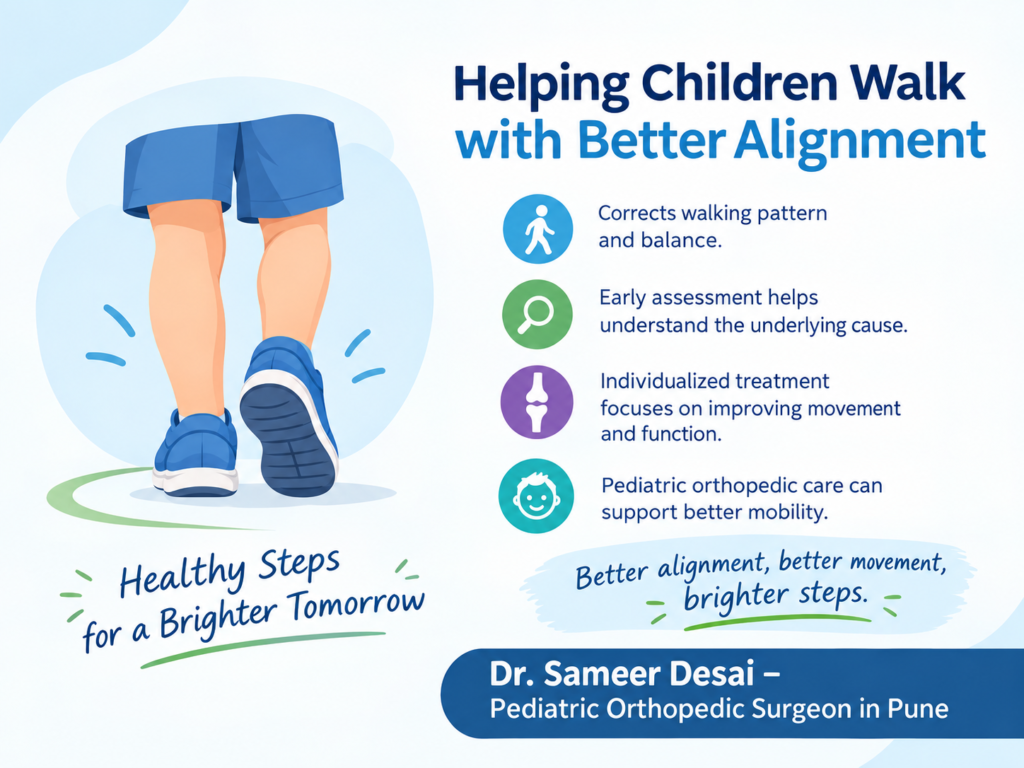
Scissoring Treatment in Pune: Helping Children Walk with Better Alignment

Walking is an important milestone in every child’s development. However, some children may develop an unusual walking pattern in which their legs cross or come close together while walking. This is commonly known as a scissoring gait. Scissoring can affect a child’s balance, coordination and overall mobility. Identifying the underlying cause early can help in planning appropriate treatment and supporting better movement as the child grows. What Is Scissoring Gait in Children? Scissoring gait is a walking pattern where the legs move toward or cross over each other while taking steps. It can occur when certain muscles around the hips and legs become tight or overactive. Parents may notice signs such as: Legs crossing while walking Difficulty maintaining balance Stiffness in the legs Walking with a narrow base Frequent tripping or difficulty taking steps Difficulty with smooth and coordinated movements The cause can vary from child to child, so proper evaluation is important before deciding on treatment. Why Is Early Assessment Important? A child’s bones, muscles and joints continue to develop throughout childhood. An unusual walking pattern should therefore be assessed to understand whether it is related to muscle tightness, joint alignment, neurological conditions or another underlying concern. Early assessment can help identify movement difficulties and allow treatment to be planned according to the child’s individual needs. Scissoring Treatment in Pune Scissoring treatment in Pune may vary depending on the child’s age, symptoms, muscle tone, flexibility and underlying condition. Treatment may include: Physiotherapy Physiotherapy can help improve flexibility, muscle strength, balance and coordination. Specific exercises may also help the child develop better movement patterns. Stretching and Muscle Management When tight muscles contribute to scissoring, appropriate stretching and muscle management may be recommended to improve flexibility and movement. Orthotic Support Some children may benefit from braces or orthotic devices to support proper positioning and alignment of the legs and feet. The type of support depends on the child’s individual requirements. Medical Treatment In certain cases, additional medical treatment may be considered to manage excessive muscle tightness or improve movement. Surgical Treatment If significant muscle contractures or bone and joint alignment problems are present, surgery may sometimes be recommended. The decision depends on the child’s condition and detailed clinical assessment. How a Pediatric Orthopedic Surgeon Can Help Consulting a Pediatric orthopedic surgeon in Pune can help parents understand why their child is having difficulty walking and whether the problem requires treatment. A pediatric orthopaedic evaluation focuses on the child’s developing bones, joints, muscles and overall movement. Based on the assessment, an individualized treatment plan can be suggested. The goal of treatment is not simply to change the child’s walking pattern. It is to improve mobility, comfort, balance and functional movement while supporting healthy development. When Should Parents Seek Medical Advice? Parents should consider an evaluation if their child: Frequently crosses their legs while walking Has difficulty walking or maintaining balance Shows persistent leg stiffness Trips frequently Has difficulty standing or taking independent steps Shows a noticeable change in walking pattern Has difficulty keeping the legs properly aligned Early professional assessment can help identify the underlying concern and determine whether treatment is needed. Helping Children Take Better Steps Every child develops at their own pace, but persistent walking difficulties should not be ignored. With appropriate assessment and individualized care, children with movement and alignment problems can receive support suited to their specific needs. Dr Sameer Desai | Paediatric Orthopedic Surgeon in Pune provides specialized orthopaedic care for children with walking, alignment and movement-related concerns. If your child’s legs cross while walking or you notice an unusual walking pattern, consulting a pediatric orthopaedic specialist can help you understand the cause and appropriate treatment options.

Scissoring Treatment in Pune: Helping Children Walk with Better Alignment Read More »

Scissoring treatment in pune

Scissoring Gait in Children: Early Signs, Causes & Scissoring Treatment in Pune

As your child grows, every step they take is an important milestone. While occasional stumbling is common during early development, walking with crossed legs or an unusual gait may indicate an underlying orthopedic or neurological condition. One such condition is Scissoring Gait, where a child’s legs cross over each other while walking, giving the appearance of a scissor-like movement. Early diagnosis and timely treatment can significantly improve mobility, balance, and overall quality of life. If you’re looking for Scissoring treatment in Pune, consulting an experienced specialist is the first step toward effective care. What is Scissoring Gait? Scissoring gait is an abnormal walking pattern in which the legs cross each other during movement. This happens due to increased muscle tightness (spasticity), weakness, or problems affecting the brain, spinal cord, or muscles. The condition is commonly seen in children with neurological disorders but can also occur due to other orthopedic concerns. A skilled Pediatric orthopedic surgeon in Pune can evaluate your child’s walking pattern and recommend the most suitable treatment plan. Signs Your Child May Need Scissoring Treatment Parents should watch for the following symptoms: Legs crossing while standing or walking. Difficulty maintaining balance. Frequent tripping or falling. Walking on toes. Stiffness in the hips, thighs, or legs. Delayed walking milestones. Difficulty running or climbing stairs. Reduced coordination during movement. If you notice these signs, consult a child orthopedic surgeon in Pune for a detailed assessment. What Causes Scissoring Gait? Scissoring gait may develop due to several underlying conditions, including: Cerebral palsy Muscle spasticity Neurological disorders Birth-related brain injuries Spinal cord conditions Developmental disorders Certain genetic or muscular diseases Identifying the root cause helps determine the most effective treatment approach. How is Scissoring Gait Diagnosed? A pediatric orthopedic specialist may recommend: Clinical gait examination Physical and neurological assessment Muscle strength and flexibility evaluation X-rays (if required) MRI or CT scan (in selected cases) Gait analysis A proper diagnosis ensures that treatment is personalized for your child’s condition. Scissoring Treatment in Pune Treatment depends on the severity of the condition and its underlying cause. Options may include: Physiotherapy Regular exercises improve flexibility, muscle strength, balance, and walking ability. Stretching Exercises Targeted stretching helps reduce muscle tightness and improves joint mobility. Orthotic Support Braces or splints help maintain proper leg alignment and improve walking posture. Medications In selected cases, medications may be prescribed to reduce muscle spasticity. Botox Therapy Botulinum toxin injections may be recommended to temporarily relax tight muscles in suitable patients. Pediatric Orthopedic Surgery When conservative treatment does not provide adequate improvement, surgical correction may be considered to improve walking mechanics and limb alignment. An experienced Pediatric orthopedic surgeon in Pune will recommend the most appropriate treatment based on your child’s individual needs. Why Early Treatment Matters Ignoring abnormal walking patterns can lead to: Progressive joint stiffness Muscle shortening Poor posture Hip or knee deformities Difficulty participating in daily activities Reduced confidence and independence Early intervention improves long-term mobility and supports healthy physical development. Tips for Parents Observe your child’s walking pattern regularly. Do not ignore repeated falls or unusual leg positioning. Encourage prescribed physiotherapy exercises. Attend regular follow-up appointments. Avoid self-diagnosing gait abnormalities. Seek expert evaluation as soon as symptoms appear. Why Choose Dr. Sameer Desai? When searching for Scissoring treatment in Pune choosing an experienced specialist can make a significant difference in your child’s recovery. Dr. Sameer Desai | Paediatric Orthopedic Surgeon in Pune | Clubfoot | Knock Knees offers comprehensive evaluation and treatment for children with walking abnormalities, limb deformities, clubfoot, knock knees, bow legs, and other pediatric orthopedic conditions. With a child-friendly approach and individualized treatment plans, Dr. Sameer Desai focuses on helping every child achieve better mobility and improved quality of life. If you are looking for a trusted child orthopedic surgeon in Pune, early consultation can help your child receive timely care and the best possible outcome. Conclusion Scissoring gait is a treatable condition when identified early. Recognizing the warning signs and consulting an experienced Pediatric orthopedic surgeon in Pune can help prevent complications and improve your child’s ability to walk comfortably and confidently. If your child frequently walks with crossed legs, struggles with balance, or experiences repeated falls, don’t delay seeking professional advice. Early diagnosis and expert Scissoring treatment in Pune can make a lasting difference in your child’s future mobility and overall development.

Scissoring Gait in Children: Early Signs, Causes & Scissoring Treatment in Pune Read More »